
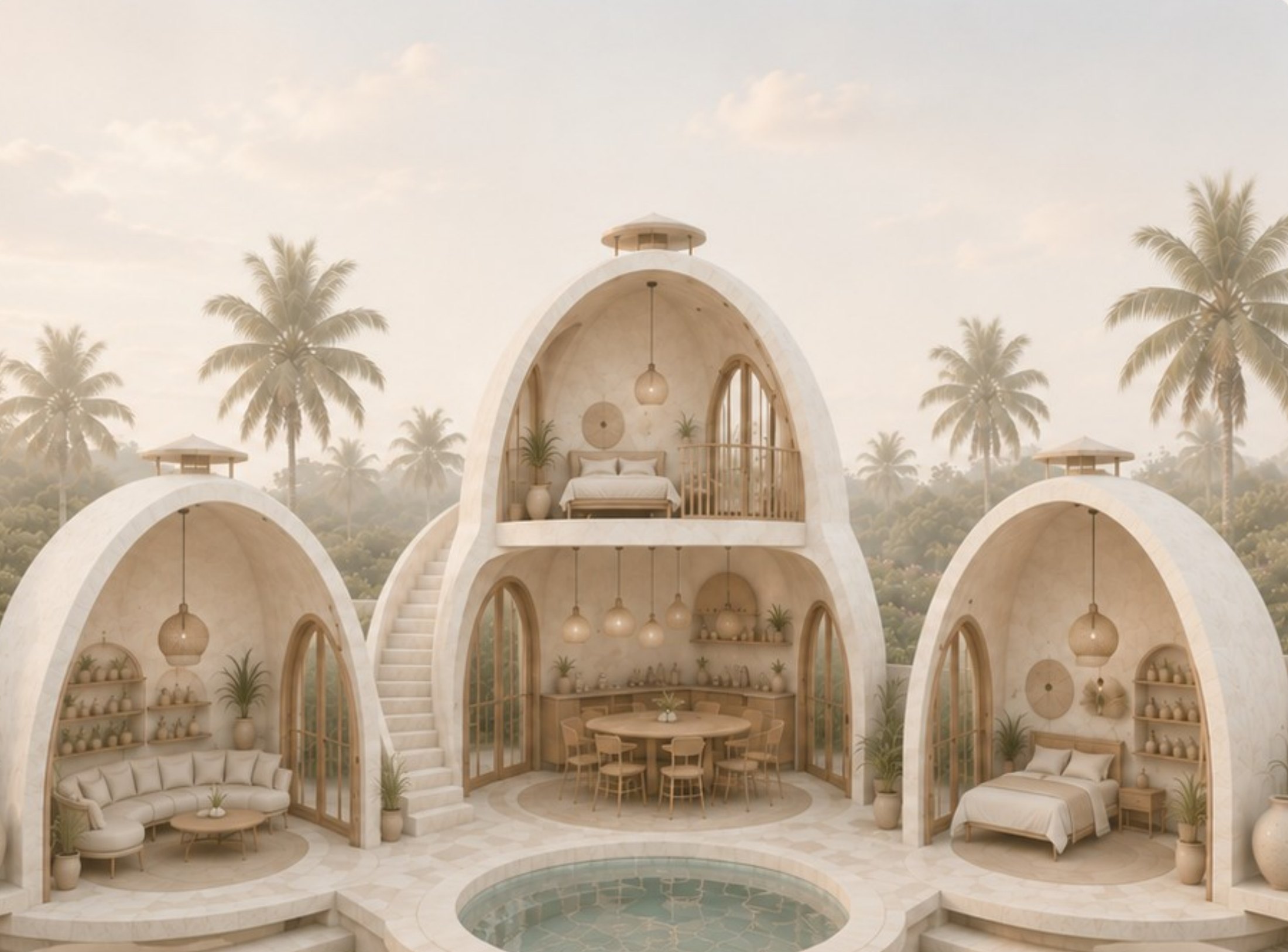
In sustainable architecture, art becomes a tool for living harmoniously with nature — weaving beauty and sustainability into the fabric of a community. Every aspect of Al-Quba's design and construction is chosen to minimise environmental impact.
Bamboo is central to the project — a rapidly renewable resource that can be harvested without long-term environmental damage, unlike concrete or steel.
Bamboo's natural flexibility lets the domes withstand strong winds and seismic activity — proven when dome structures were used to rebuild Lombok after 2018.
The dome form is naturally efficient: passive cooling, generous daylight, and energy-conscious systems reduce operating impact year after year.
Skilled Lombok makers shape every dome. Supporting local talent keeps expertise, income, and pride rooted in the community that welcomes us.
Efficient water management, landscaped gardens, and green open spaces create a healthier microclimate for residents and wildlife alike.
Sustainability is social too: communal spaces, shared gardens, and thoughtful amenities designed so generations can thrive here together.
“Unique luxury villas conceived as artworks — rooted in nature, committed to tomorrow.”
The domes are built by local craftsmen from renewable materials such as bamboo and lime-based render. The curved shape reduces the need for air conditioning, and the village shares solar power, rainwater collection and waste management.
Eco-certified and low-running-cost properties command higher rental rates and resale interest in Southeast Asia, and lower utility costs improve net rental yield for owners.